

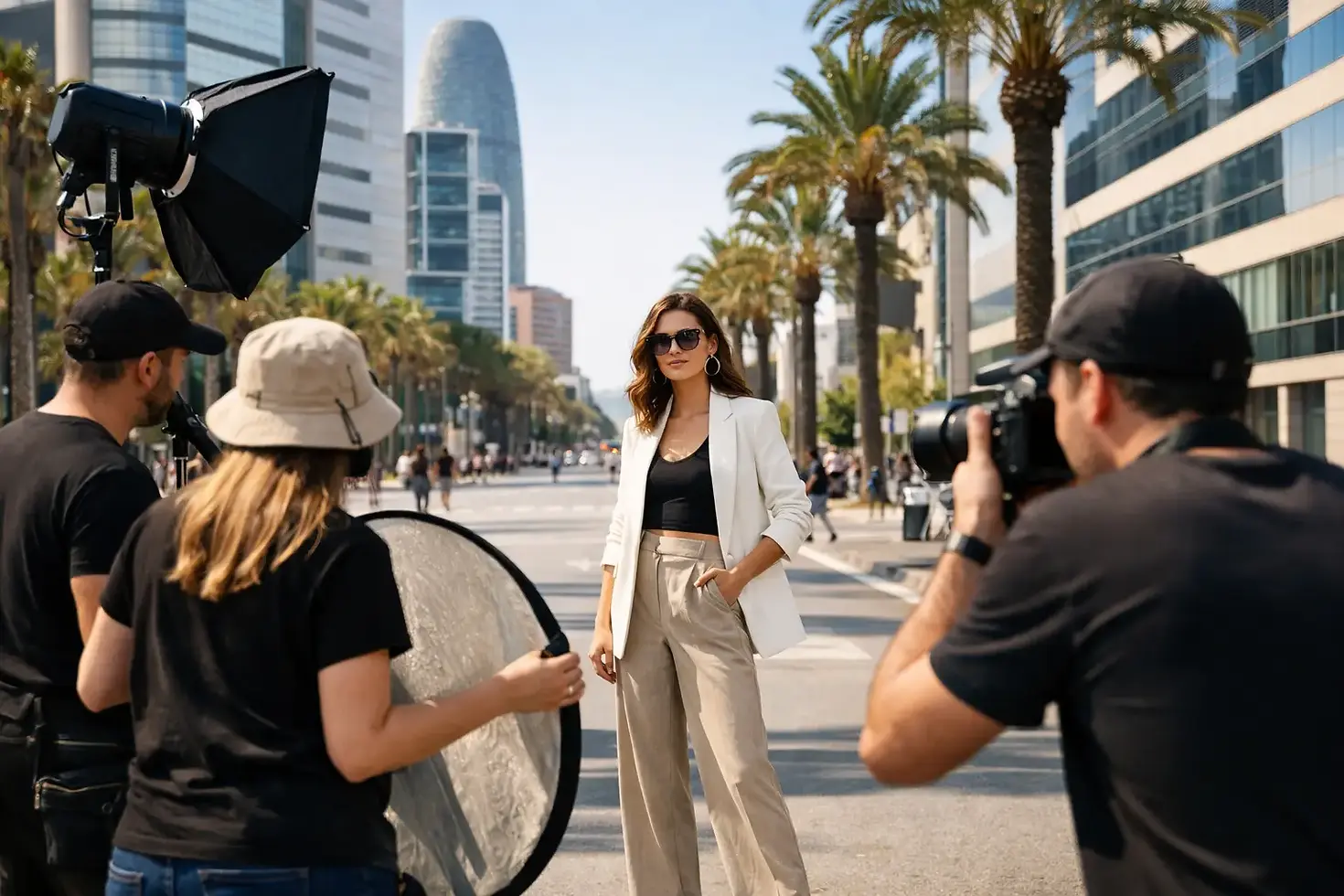
Barcelona Editorial Photoshoot With Real Presence

A Barcelona editorial photoshoot should feel like more than a set of polished portraits beside familiar landmarks. It is an opportunity to place your personality, style and ambition inside a city built for visual storytelling - sculptural façades, warm stone, graphic shadows, Mediterranean colour and streets that can feel intimate or electric within a few minutes’ walk.
For a model, actor, influencer or creatively minded traveller, the difference lies in intention. An editorial session is not about simply looking good in Barcelona. It is about creating a considered series of images with mood, movement and a point of view. The city becomes part of the narrative, while you remain unmistakably at its centre.
What makes an editorial shoot different?
A holiday portrait session may capture spontaneous moments, laughter and the pleasure of being somewhere beautiful. Editorial photography uses the same human warmth, but adds a more deliberate visual language. Each location, outfit, pose and lighting decision contributes to a coherent set of photographs.
That does not mean the experience has to feel stiff. In fact, the strongest editorial images often come from a relaxed subject who has been given clear, confident direction. A slight change in shoulder position, a pause between steps or a glance away from the camera can create a frame that feels natural while remaining carefully composed.
The aim might be a refined fashion portfolio, cinematic social content, actor headshots with greater atmosphere, or personal imagery that feels more artful than standard travel photography. The right approach depends on how the photographs will be used. A model needs range and clean visual storytelling; an influencer may need variety across several outfits and crops; a solo traveller may simply want images that feel extraordinary without becoming overly posed.
Choosing a Barcelona editorial photoshoot setting
Barcelona offers visual contrast in abundance, which is why location choice matters so much. A shoot should not attempt to include every famous sight. Moving constantly can flatten the experience and leave little time for the details that give photographs depth. Two or three nearby settings, selected for their different textures and light, often produce a more compelling gallery.
Gaudí’s architecture is ideal for clients seeking colour, curve and a distinctly Barcelona sense of place. Mosaic surfaces, organic lines and dramatic geometry can bring energy to a fashion-led look. They suit confident styling, movement and images where the surroundings are allowed to play an active role.
For a quieter, more luxurious mood, the Eixample’s elegant avenues, stone entrances and decorative ironwork offer a restrained architectural backdrop. These settings work beautifully for tailored clothing, neutral palettes and portraits where expression takes priority over spectacle. In the Gothic Quarter, narrow passages, worn textures and pools of light create a more intimate, cinematic feeling, although timing is essential to avoid the busiest periods.
The coast introduces a different language altogether. Open sky, pale sand and reflective water can make a series feel lighter and more spacious. Beach locations are particularly effective near sunrise or towards the end of the day, when the stronger midday light has softened and the colour begins to settle.
A local photographer’s value is not only knowing where these places are. It is knowing how they photograph at a particular hour, where the crowds gather, which angles feel fresh, and when a dramatic backdrop risks distracting from the person in front of the lens.
Light is the real location
Barcelona’s sunlight is one of its greatest assets, but it rewards planning. Early morning offers a cleaner city, gentler light and a calmer pace, particularly in central areas. Late afternoon and the period before sunset bring warmth, longer shadows and a more romantic cinematic finish.
Midday can still work, especially for an editorial concept built around hard shadows, white stone and bold contrast. It demands more precision, however. Rather than fighting the sun, a professional photographer will use shade, reflected light, architectural cover and carefully chosen angles to keep skin tones flattering and the image intentional.
Weather also shapes the final result. A bright, clear day gives crisp Mediterranean colour; an overcast day can be wonderfully soft for portraits and fashion detail. A little wind can add life to hair and fabric, while rain may call for a change of route or a more sheltered concept. The important thing is flexibility, not chasing a single version of Barcelona.
Styling for photographs that still feel like you
Editorial does not mean dressing as someone else. The most successful wardrobe starts with your own identity, then refines it for the setting and camera. Choose clothes that fit beautifully and allow you to move. A jacket that sits sharply, a flowing skirt, textured knitwear or a simple monochrome look can all photograph superbly when the silhouette is clear.
It is usually better to bring two or three complete looks than an oversized suitcase of possibilities. One outfit might be clean and understated for architectural portraits, while another introduces colour or movement for a more expressive section of the shoot. Consider the relationship between clothing and location: rich patterns can compete with intricate mosaics, while a simple outfit may disappear against a pale stone background unless its cut or texture has definition.
Accessories deserve the same thought. Sunglasses, jewellery, a coat or a structured bag can create useful variation, but they should support the story rather than become a distraction. Comfortable shoes are also wise between locations, even if your final images call for something more formal.
For portfolio work, bring references if you have them, but leave room for the city and the light to influence the final direction. A reference image can communicate mood, not dictate every frame. Barcelona has its own character, and the best photographs make space for it.
Direction that creates ease rather than awkwardness
Many people arrive saying they are not comfortable in front of a camera. That is not a problem to be fixed before the session begins. It is part of the photographer’s job to create a pace and atmosphere where confidence can emerge naturally.
Clear direction is particularly valuable in editorial work. You do not need to know how to pose. Small prompts - walk towards the light, let your hands settle, turn into profile, pause and look beyond the camera - create shapes that feel believable rather than rehearsed. A good session alternates between structured portraiture and movement, allowing room for genuine expression between the more precise frames.
For couples, editorial direction can turn a familiar romantic shoot into something more dimensional. Instead of looking at the camera throughout, you may move through the city together, share a quiet moment beneath an architectural detail, or allow the space around you to suggest scale and anticipation. Families and friend groups benefit from the same balance: a few beautifully arranged portraits, then interaction, walking and the unplanned moments that give the gallery warmth.
Jamie at Iconic Fotos Barcelona brings more than 26 years of experience to this process, combining a friendly, conversational approach with professional lighting, premium equipment and close attention to composition. The result should feel effortless to the client, even when the work behind the image is highly considered.
Plan for a gallery, not just individual images
A strong editorial gallery has rhythm. It includes wider frames that establish the city, closer portraits that hold attention, horizontal and vertical compositions, moments of movement and quieter details. This variation matters for portfolio use and social publishing, but it also makes the collection more satisfying to revisit years later.
Before the shoot, think about your priority. If you need images for a casting profile, say so. If a particular outfit, brand partnership or personal milestone matters, build it into the plan. If the photographs are primarily for a honeymoon or a first visit to the city, the direction can be more romantic and observational. There is no single correct editorial style, only a style that serves the story you want the pictures to tell.
Leave a little margin in the schedule, especially if you are visiting during a busy season. Barcelona is a living city, not a controlled studio. A street performance, shifting sunlight or an unexpectedly quiet corner can become the very element that makes the work feel original.
The photographs worth keeping are rarely the ones where everything looked perfect. They are the ones where the setting, the light and your presence came together for a brief, convincing moment - and Barcelona gave that moment a stage.


Comments